Sunday, June 16, 2013

The Superman Code Complex

NOTE: This article contains massive spoilers for Man Of Steel. If you haven’t seen the movie yet and are trying to avoid spoilers, bail out now.

I am a huge Superman fan. My favorite movie of all time is not a Star Trek film, a Star Wars film, or even a Disney film, it’s 1978’s Superman: The Movie. When I wasn’t pretending to be Captain Kirk as a kid, I was zooming around the house in my makeshift Superman costume with John William’s soundtrack blaring in the background.
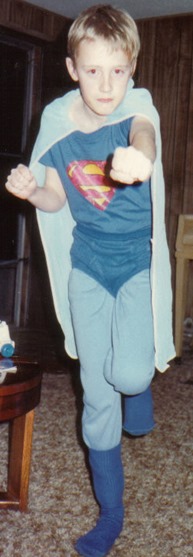
superdaveI am totally serious about that

I love Superman. And even though I went through a very brief teenage phase where I thought Spider-Man was cooler because he was angsty and Todd McFarlane drew him, the Death of Superman arc in the early 90s pulled me right back into Superman fandom.

These days I’m not a regular reader of the comics, but my favorite stories include most of Grant Morrison’s work (especially All Star Superman) and Mark Waid’s Kingdom Come and Birthright. You could say I prefer the more classic Superman that has fun, science fiction-y adventures and a strict moral code.

And I liked Man Of Steel.

You’re probably wondering if you read that wrong. How could a guy who loves the colorful, funny, lighthearted 1978 film also like the desaturated, grimmer, more somber 2013 edition? How could a guy who loves the version of Superman whose greatest power is his instinctive knowledge of right and wrong and who’s sworn never to use his power to take a life enjoy a film where the Last Son of Krypton snaps a guy’s neck?

Well, let me go ahead and talk about the Zod Neck Snap since it is the most controversial element of the film. I’m a big believer in the Superman Doesn’t Kill rule. If Superman breaking Zod’s neck was presented as one of those moments where the audience is supposed to cheer, if Superman looked at the camera and tossed off a snarky one-liner after he did it, then I would be very angry indeed, and this post would be all about what idiots the filmmakers are. But that’s not what happened, is it?

The point of the scene was to force Superman into an impossible choice: kill Zod, an act he feels is morally repellent and wrong, or allow Zod kill the family he’s threatening with his heat vision, and possibly thousands, millions or even billions more. (And no, the family couldn’t run away. That’s what I though at first, too, but their path was blocked by rubble) He didn’t have time to think about it or to formulate some kind of alternative. The options were: 1. Kill Zod, or 2. Allow Zod to kill a lot more people. Instead of our hero getting to choose between a right and a wrong, he’s forced into a situation where he has to choose between a wrong and a wrong. That’s good drama right there.  And yet, many critics argue that the writers should have sucked the drama out of the scene by giving Superman some kind of technobabble alternative. To those people, I have three words: Star Trek: Voyager.

Remember Voyager? That horrible, late-90s, “lite” version of Star Trek that is pretty much universally reviled, even among Star Trek fans? A big reason why it’s so hated is that it set up a situation where the characters would allegedly be forced to make hard choices: stuck on a small spaceship seventy years from home with limited supplies, limited fuel, no allies, and the crew divided into opposing Starfleet and Maquis factions-and then completely failed to follow through with any of it. Is that what you wanted to have the writers of this film do? And rest assured, if the writers had given Superman the last-second technobabble alternative the critics seem to want, then people would have just criticized that decision instead and accused the writers of taking the cheap and easy way out.

What it comes down to, I think, is that a lot of people (some of whom work for high-traffic sites like io9) decided to dislike Man of Steel before anything at all was known about it. And because, like any film, it has a few plot holes and imperfections, as well as some genuinely controversial story points, these things are being used as “evidence” of how bad it is by people who already decided to hate it ahead of time.

The fact is that Superman’s killing of Zod was not glorified. It was not presented as a happy, triumphant moment. It was an agonizing decision that obviously cost Superman dearly. The people who are saying things like “Man of Steel gives us a Superman who won’t hesitate to kill when he thinks it’s necessary” either haven’t seen the movie or are deliberately misinterpreting it to bolster the decision they made to dislike it in advance.

However, all of that being said there is one criticism I have of the scene, and it’s that little kids were subjected to it. The showing I went to had lots of parents with their kids, many of them 10 or under, and it’s a shame they had to see that. If for no other reason than that, I really wish the filmmakers had found another way out. Even though it would have robbed the film of some drama, even if it would have given Superman an “easy out” and allowed him to sidestep having to make a tough dramatic choice, I think that might have been preferable to subjecting kids to a scene where a man’s neck gets broken.

Moving on, although my opinions of the film differ greatly from the conventional Internet opinion of it, there’s one other criticism of the movie that I do agree with: the huge amount of destruction and the ignoring of the huge amount of civilian casualties that must have occurred. However, the problem as I see it is not that Superman fails to show concern for civilians caught in the crossfire of his superhero fight, it’s that the movie kind of forgets that these civilians even exist. Aside from a few shots of people running away from the destruction, civilians are only present when the film needs them to create peril or drama, like when Perry and Steve are trying to rescue Jenny, or when Superman is forced to kill Zod to save the family he’s threatening. In the scenes where Superman and Zod are punching each other through buildings, those buildings appear to be empty. I don’t think that was a writing decision, I think the production just didn’t want to go to the trouble to animate people diving out of the way in those shots. Overall, it goes a long way toward making Metropolis feel less like a real place and more like the final level of a Superman video game.

I’ve read some very thoughtful criticism saying it would have been nice if more drama in the Zod fight could have come from Superman desperately trying to save civilians and fight Zod at the same time, and I totally agree with it. I really believe that Warner Bros. was stung by the complaints that Superman Returns didn’t have any fighting in it and made this film a Superhero Punching Fest to compensate.

I also believe lazy writing is responsible for how life in Metropolis seems to have gone back to normal when Clark Kent comes to work at the Daily Planet, even though it seems that only few weeks or maybe months have passed. After 9/11, a sort of pall hung over New York for weeks, if not months. The disaster in Metropolis was a lot bigger; how can life have gone back to normal there when there’s a 10-mile-wide crater in the middle if the city? Obviously, having spent over two hours telling this origin story, the movie wants to wrap everything up in a nice pretty bow in the last five minutes. It’s a lot like the end of J.J. Abrams’ first Star Trek film, where Kirk is directly promoted from Cadet to Captain at the end of the movie just so it can end with him in command of the Enterprise, since that’s the familiar status quo. Since the people behind Man of Steel made a big deal about how realistic it was going to be, it would have been nice if that realism could have extended to how a city would realistically react to being half-leveled by superpowered aliens and their Evil Death Machine. But the way I see it, this isn’t a problem just with this film but with these kinds of “origin story” movies in general.

So, now that I’ve defended Man of Steel against some of the criticisms leveled against it we arrive back at the question I asked several paragraphs ago: how can a guy who loves the Christopher Reeve films and the more idealistic portrayals of Superman in the comics also like Man of Steel? Well, just because I love some of the more fantastical takes on Superman doesn’t mean I can’t also appreciate a more “realistic” interpretation of the character.

I like to see Superman’s powers visualized with modern special effects. I also appreciate how they’re consistently portrayed and don’t vary according to the needs of the plot. For example, in the 1978 film he can fly fast enough to reverse time, but not stop two missiles. And in Superman Returns, he flies right into Luthor’s Kryptonite island trap without using his vision powers to check the place out first and discover that it’s made of Kryptonite and maybe he shouldn’t land on it. If there’s any of that in Man of Steel I didn’t see it.

The acting in the film is top-notch. Henry Cavill is great. Amy Adams is the best Lois Lane we’ve ever had. Michael Shannon is an excellent Zod, with a more logical reason for his actions beyond the “cartoon villain” motivations Terence Stamp had to work with in the Donner films. I love the little story arc Christopher Meloni’s character has, and I thought Laurence Fishburne made a fantastic Perry White. I couldn’t believe the some of the negative reactions I saw when he was first cast in the role, all based around the fact that he’s African-American, and not white like all previous versions of the character. Who cares? You should get the best actors you can, and if an actor of Fishburne’s caliber is available you had darned well better cast him!

Most of all, I appreciated the film’s trying to realistically portray how people would react to the presence of someone like Superman. In the previous films  and TV shows, we’ve never seen that. Especially in the 1978 film, everyone seems just pleased as punch about the flying bulletproof space alien, and not the least bit freaked out. In some of the more recent comic book reboots of Superman’s origin, he’s been distrusted by the military at first, but as soon as he does a few good deeds that distrust is quickly forgotten (I’m thinking of Birthright and Geoff Johns’ Secret Origin here. The New 52 handles it a little better). Staying on the realism theme, I also appreciate how Lois Lane is in on Clark’s secret from the beginning, ensuring that we won’t be asked to believe than an award-winning investigative reporter can be fooled by a pair of glasses. Still, in the brief scene we saw with Clark in the glasses it didn’t look like he was putting forth any effort to try to act like a different person. It reminded me of Dean Cain’s Clark, and not in a good way. Hopefully the dual identity thing will get a believability injection in the sequel.

The fact that I enjoyed Man of Steel doesn’t mean I think everyone who didn’t is somehow wrong or not entitled to their opinion. There are several people whose opinions I respect (Mark Waid, for example) who didn’t like the movie and gave very thoughtful reasons why. And that’s fine. My only problem is with the common Internet tendency to try to appear smarter than everyone else by preemptively declaring that a piece of popular entertainment is not any good.

So those are my thoughts on Man of Steel. If you’ve read this far, then you probably deserve some kind of medal. Or maybe you just have too much spare time.

Thursday, May 16, 2013

Star Trek Into Blockbusterdom

NOTE: This article contains spoilers for Star Trek Into Darkness. If you haven’t seen the film and wish to remain spoiler-free, go no further.

I’m fully aware that, as an old-school Star Trek fan, I was supposed to hate Star Trek Into Darkness. This article should be a lengthy dissertation on all the movie’s faults, and if you found it fun and entertaining, I’m supposed to tell you to stop it, because you are wrong, wrong, wrong. I should also prove how smart and witty I am by making several snarky comments about lens flares.

But that’s not what I’m going to do.

Like its predecessor, Star Trek Into Darkness is a fun ride that does not always make a ton of sense in the story department. The fact is that there are some serious, story-derailing plot holes. But you know what? EVERY Star Trek film except for The Motion Picture and The Voyage Home has serious, story-derailing plot holes. My knowledge of movies is by no means encyclopedic, but I can’t think of one summer blockbuster ever that doesn’t have serious, story-derailing plot holes. A sizable chunk of the Internet is devoted to making fun of them!

That being said, there is one moment that completely took me out of the movie. You know the one I mean:

khaaan

I know, when director’s commentaries are recorded and interviews are given, J.J. Abrams and his cohorts will claim that the moment where Spock yells “Khaaaaan!” was meant as an affectionate homage, a nod to old-school Star Trek fans to assure us that the filmmakers made this movie for us, too. Unfortunately, it kind of made it look like they’ve never actually seen The Wrath of Khan, or at least weren’t aware of the reaction William Shatner’s famous line elicits. I don’t know how cinema audiences reacted to it in 1982 because my parents didn’t believe in taking their 4-year-old to a movie in which alien brain worms slither in and out of peoples’ ears, but I sure can tell you the reaction that Shatner’s yell of “KHAAAAN"!” gets today: it makes people laugh. Or at least chuckle. It’s not a Crowning Moment of Awesome, it’s more of a Crowning Moment of Cheesiness That Still Somehow Manages To Be Kind Of Awesome.

So towards the end of Star Trek Into Darkness when Kirk dies saving the Enterprise, at a moment when the filmmakers clearly are trying to make you cry, having Spock howl “KHAAAAAN!” elicits the completely opposite reaction. It makes you laugh. And in so doing, it takes you right out of the movie and breaks the suspension of disbelief. For a moment you lose the ability to pretend that the stuff on the screen is actually happening and that the lines the characters are saying are really their words, and not something that’s been carefully crafted by a screenwriter.

So yeah, the “KHAAAAAN” thing bugged me. But other than that, I honestly did enjoy the movie. It was big and entertaining, and the characters were genuinely pleasurable to watch. Especially Simon Pegg’s Scotty. He absolutely stole every scene he was in, and I really enjoyed watching him do his thing.

Better yet, the movie really tried (as much as a big dumb summer blockbuster can) to have a Star Trekkian message and to comment on current events. I appreciate that.

So why does it seem that the majority of the “geek community” is being so negative towards this film? Are they just trying to make themselves look smarter than everyone else by disparaging a piece of popular entertainment on the Internet? I’m sure that’s true for some people. But here’s why I think that J.J. Abrams’ Star Trek films are more heavily-criticized than their predecessors, even though they share many of the same kinds of story problems.

The people who wrote for the original Star Trek were not raised in a cocoon of electronic media. They read books. They had life experience outside the entertainment industry: Gene Roddenberry served in the military and worked as a commercial airline pilot and a police officer before he became a writer. Gene Coon, who contributed almost as much to the Star Trek universe as Roddenberry did, served as a Marine in World War II. Nicholas Meyer, who directed two of the Original Series films and wrote for three of them, is very well-read and peppered his scripts with literary references.

One gets the impression that J.J. Abrams and his associates like Damon Lindelof, Bob Orci, and Alex Kurtzman don’t have much experience in anything outside watching movies and TV shows, and maybe reading comic books and playing video games. This causes the movies they make to lack a certain kind of depth, and I think it’s something that people pick up on, if only subconsciously.

I’ll have some more random and nitpicky thoughts about Star Trek Into Darkness later, but for now my verdict is: fun movie, entertaining, well-acted, has some plot holes. In other words, a summer blockbuster.

Tuesday, April 9, 2013

The Walt Disney World Ticket Price Inflation

NOTE: The historical Walt Disney World ticket prices in this article were taken from the WDW Historical Ticket pages on AllEars.net and adjusted for inflation using the inflation calculator located here, then rounded up to the nearest dollar to estimate 2013 prices.

The Walt Disney Company is a for-profit corporation. Although many people think of it as some kind of beloved public institution, that is not really the case. It’s a private business and its only obligation is to be successful, which our economic system defines mostly as posting higher profits at the end of each financial quarter than they did for the same quarter in the previous year. I’m not going to make the argument here that Disney has some kind of obligation to make sure that their theme park offerings are affordable to everyone, because they really don’t.

That being said, let’s talk about Walt Disney World ticket prices. They’re expensive, no doubt about it. It’s easy to assume that the annual price increases merely adjust the ticket prices for inflation, and that their relative cost has actually remained fairly constant over the years. But is that really the case? Let’s take a look.

We’ll start on the most basic level: the price of a one day/one park ticket. The chart below traces the price of a one day/one park ticket from 1981 (the first year a ticket was available that included both admission to the park and all attractions and shows therein) to 2012, which was the last time that prices were increased. I’m sure this table will quickly become outdated in a few months when Disney announces their annual price increases.

YEAR TICKET PRICE TICKET PRICE (Inflation Adjusted)
1981 $11.50 $29
1982-EPCOT Center opens $15 $36
1989-Disney-MGM Studios opens $29 $53
1998-Animal Kingdom opens $42 $59
2005-Magic Your Way debuts $59.75 $70
2012 $89 $89

I was in a Twitter conversation recently (or maybe it was more of an argument, I’m not really sure) about WDW ticket prices where the opinion was expressed that the prices need to be as high as they currently are to maintain the profitability of everything on property: the four theme parks, the two water parks, Downtown Disney, the miniature golf course, and all the resort hotels. Sounds logical, right?

By that reasoning, the above chart should show a steady rise in prices as more new things were added to the property, but the price should then basically plateau when Disney stopped adding things. But that’s not what happened. Let’s take a look at the same data in a more visual form:

image

As I mentioned in my last post, park admission was seriously underpriced in the early 1980s. In the years following Michael Eisner’s arrival ticket prices went up sharply as the new regime brought them back into line with their actual value, thus the sharp increase between 1982 and 1989.

Of course, those years also saw the opening of Disney-MGM Studios, Typhoon Lagoon, Pleasure Island, the addition of five new pavilions at EPCOT Center, and the opening of the Grand Floridian and Caribbean Beach resort hotels, which certainly gives credence to the idea that prices need to rise as more things are added to the property.

Now let’s fast-forward to 1998, the year of Walt Disney World’s last big addition: Animal Kingdom. During the nine-year period between 1989 and 1998 the property had gained one new water park (Blizzard Beach) fourteen resort hotels, the Boardwalk, Wide World of Sports, and Downtown Disney’s West Side. Yet the inflation-adjusted price of a one-day ticket at the end of that year was about $59, a mere six-dollar increase from nine years earlier. It’s almost as if the company didn’t need to drastically raise ticket prices to maintain overall profitability as more and more things were added.

But maybe I’m wrong. Maybe admission prices were artificially low in 1998 and really needed to be raised to keep Disney World’s finances comfortably in the black. Let’s fast-forward again to 2005, seven years later. Although there were no significant additions to the property during those years, the price curve moves rather sharply upward to $70, kind of like it did between 1982 and 1989.

So that’s it, right? There have been no new theme parks or water parks constructed since 1998. And although the Magic Kingdom has seen some expansion, far more has been subtracted since the last theme park opened: Downtown Disney’s Pleasure Island was shut down in 2008, EPCOT’s Wonders of Life pavilion closed permanently on the first day of 2007, and the second floor of the Imagination pavilion and huge swaths of Innoventions exhibition space remain vacant. By all rights, the inflation-adjusted price of a one-day ticket should have remained basically unchanged since 2005, and the line on our chart should flatten out.

But that’s not what we see. In fact, the price rose just as sharply between 2012 and 2005 as it did between 2005 and 1998. How was Disney able to do this without igniting a firestorm of consumer outrage? Easy. They just rigged the system to make multi-day trips look like a better deal.

You see, at some point the Disney World Number Crunching Brigade figured out that the customers who stayed multiple days on property spent more money per person per day on things like dining and merchandise than day-trippers. And then they probably started having visions of what it would be like if a greater percentage of the 150,000 people who visit the theme parks each day belonged to that lucrative segment of multi-day vacationers.

scrooge_moneyThe visions looked a lot like this

The problem, of course, was that a multi-day trip with a stay in a Disney resort is way more expensive than just one day in the parks. And while tourists are not the most intelligent group of people (who else willingly spends time outside during Florida’s brutal summer months?) they’re at least smart enough to figure that out. So Disney set about making multi-day vacations look like a better deal than they actually are while at the same time discouraging the concept of simply visiting for the day. Enter the Magic Your Way pricing scheme.

When it was introduced, I’m sure Magic Your Way was marketed as this great thing whose sole purpose was to save Disney’s customers money and give them more choices because they’re such wonderfully nice people and the company loves them. Of course that was a lie. Its actual purpose was to discourage one-day trips and push customers into more lucrative multi-day stays. To see how it accomplishes this, let’s look at another couple of charts:

Days

MYW Base Ticket Price

Price Per Day

1 $89.00 $89.00
2 $176.00 $88.00
3 $242.00 $80.67
4 $239 $59.75
5 $268 $53.60
6 $278 $46.33
7 $288 $41.14
8 $298 $37.25
9 $308 $34.22
10 $318 $31.80

Here’s a visual expression of the same data:

image

As you can see, as your length of stay increases, your price per day decreases. A one-day ticket costs $89. But if you’re one of those really affluent customers who can afford 10 days on property, then your per-day ticket price is only going to be $31.80!

So the vacationer who plans to come to Orlando, stay in one of the hotels on International Drive, and mix a couple days at Disney World in with trips to Universal Studios, Sea World, and other points of interest is more likely to rethink his plans when he sees the high price of only one or two days on the property. And that’s the way Disney wants it, because they’d much rather he spend all his money on their property instead of spreading it around other Orlando-area attractions.

Another way that Disney steers customers toward its most profitable offerings is with clever marketing, like this TV commercial:

See, it’s really best for Disney if their customers don’t try to break apart and analyze the cost of the various aspects of their vacation like ticket prices, dining, and resort rates, because then they might make choices that are in their own best interest and not Disney’s. So the company ties everything up into a nice, neat Vacation Package and expresses its cost a way that makes it sound inexpensive. ($99 per person per day!) Another nice thing about vacation packages is that it makes it easier to coax more money from customers via upselling them to things like a better Dining Plan, or a Moderate resort room instead of a Value.

But what about locals who just want to come for the day, or people who are driving down I-4 on their way to somewhere else and want to spend part of a day at Disney World but can’t make a whole vacation out of it? They can either shell out big bucks for an Annual Pass or pay the $89 one-day ticket price. And if those artificially high prices make them decide against coming to Disney World at all, then the company doesn’t have a problem with that. Again, I have absolutely no inside information, but I think the Disney World Number Crunching Brigade has decided that one-day customers are not really worth it for them. If those customers want to visit Disney World bad enough to pay $89 plus parking to be there, okay, but the company won’t go out of its way to attract them.

So, to sum this all up, Disney World’s ticket prices are structured to be artificially high on the low end and then get progressively cheaper per day the more time you spend on Disney property. It’s one of those “the more you spend, the more you save” ploys that gets people to spend more money on something than they really want to. And once the MyMagic+ system goes live in the next year or two and gives the company a a brand-new product to bundle into park admission (and that’s a whole other subject) Disney World admission will become even more absurdly expensive.

And now you’re probably expecting me to wag my finger at Disney’s obvious greed and call on them to return to the simpler days of yore when park admission was more affordable. But that’s not what I’m going to do. After all, the Walt Disney Company doesn’t exist in a vacuum. It operates in an economic system that encourages and rewards greed. If there was not an obvious financial benefit to the way Disney’s offerings are priced, then they would not price them that way.

Everyone should do their homework. Don’t blindly plunk down however much money Disney wants from you just to get your dose of “Disney Magic”. Use the Internet to look up prices. Analyze how much your vacation is really going to cost, not just in airfares, room rates and ticket prices, but also in food and merchandise prices.

Maybe you’ll decide a Disney vacation is worth it, or maybe you won’t. But at least your decision will be based on solid information and an honest assessment of what’s right for you, instead of the feelings aroused by the clever marketing of a corporate entity that, at the end of the day, doesn’t love you back.

UPDATE: The original version of this article contained a chart stating that the inflation-adjusted price of a 4-Day Park Hopper pass had dropped from $504 to $313 between 2004 and 2013. That was not correct; in fact the inflation-adjusted price of a 4-Day Park Hopper ticket was around $264. I have no idea how I made such a gigantic error. This post has been edited to remove that chart and the erroneous conclusion that was drawn from it. Huge thanks to commenter M.C. Bold for pointing out my mistake.

Tuesday, March 19, 2013

Echoes of the Vacation Kingdom

I was going through a shoebox full of old family photos recently, and I discovered a couple relics from some Disney World trips we took in the early 1980s.

First, here’s a parking ticket from April 1981. There’s so much to love here; the classic Walt Disney World logo at the top of the ticket, the sailboat/Contemporary/castle logo at the bottom, and most of all, the 50-cent price. In case you’re interested, when you adjust for inflation that 50-cent parking ticket would cost about $1.25 today. Obviously, the current $14 parking fee represents quite a substantial markup. Of course, back then the Transportation budget did not include maintenance on a large fleet of gas-guzzling buses.

MK_parking_ticket_April_1981_front

Here’s the back side of the ticket, with a nice map of the Magic Kingdom parking lot:

MK_parking_ticket_April_1981_back

Here’s another interesting little relic of a bygone era: it’s a rare Magic Kingdom park ticket from 1983:

MKticket83_front


MKticket83_back

You see, before the Walt Disney Company mushroomed into an international multimedia conglomerate, its Orlando arm wanted to play nice with other Florida businesses. My dad worked for the Lakeland-based Publix Supermarkets, and every year we’d take a trip to Disney World during the period when Disney offered discounted admission for Publix employees and their families.

Another interesting factoid: the date stamp on this ticket is October 10, 1983, the day after Disney raised the price of a one-day adult ticket from $15 to $17, making the discounted price of $11 quite a bargain, especially since it included parking. Note that this is after the attraction ticket books were phased out. Imagine paying only $11 for a day in the Magic Kingdom! These days you can hardly get a hot dog at Casey’s for that price.

Also, notice that the “official” name of the park was “Walt Disney World Magic Kingdom”. I think I like that better than the “Magic Kingdom Park at Walt Disney World Resort” nomenclature that the company uses today.

Park admission was seriously underpriced in the early 1980s, and not long after Michael Eisner took the reins of the company it increased sharply. In fact, between the beginning of 1985 and the end of 1986, the price of a one-day park ticket was raised six times! Those price increases (and the end of the “good neighbor” policy that allowed discounted admission for the employees of some Florida-based companies) effectively put regular trips to Disney World outside of my family’s price range.

Still, I’m glad I got to see the place when it was a smaller, more unique Vacation Kingdom of the World.

Monday, March 11, 2013

On Believability, Intelligence, and Underwater Spaceships

CORRECTION: The below poster for Star Trek Into Darkness is fan-made, and not an official poster from Paramount Pictures.

NOTE: This article contains what some might consider minor spoilers for the upcoming film Star Trek Into Darkness, although it’s not anything that hasn’t already been revealed in trailers and the nine-minute IMAX preview. If you’re studiously avoiding any information about the film until you see it, then bail out now.

Although I have always been a huge Star Trek nerd, I’ve mostly stayed out of arguments about the theoretical capabilities of the imaginary technology it depicts. If you examine the early writers’ guides for the Star Trek series that Gene Roddenberry worked on, you’ll notice that there’s very little concrete information about how things like the transporters, phasers, or sensors work. As you watch the shows and movies, you’ll notice that capabilities of the technology are largely dependent on the needs of the plot. The main concern, emphasized over and over again in those writers’ guides, is believability.

I bring this up because a new poster for May’s Star Trek Into Darkness hit the Internet today:

star_trek_into_darkness_poster_2

If you’ve seen any of the trailers that have been released thus far or the nine-minute IMAX preview, then you know that at some point near the beginning of the film, the Enterprise is “hiding” beneath the ocean of an alien planet with an atmosphere and gravity similar to Earth, and that it dramatically rises up out of the water and eventually flies off into space in what is sure to be a dramatic and exciting moment in the film.

I don’t like it.

Isaac Asimov once told Gene Roddenberry that he appreciated Star Trek because, although it broke the rules of physics for dramatic convenience, it did so in a way that was still believable and respected the intelligence of the audience. Of the two big sci-fi franchises, Star Trek has always been seen as the “smarter” one. It’s inspired people to become astronauts and doctors and scientists and engineers. Star Wars is more “fun” in the conventional sense, and I certainly respect J.J. Abrams’ attempts to inject some of that audience-pleasing action and fun into Star Trek. Lord knows it needs it, after the late-90s/early 2000s phase when the franchise devolved into endless scenes of characters pushing buttons and spouting technobabble.

But here is my nerdy problem with the Underwater Enterprise. It’s not that I don’t think the ship could survive underwater without leaking. It’s that the Enterprise has always been a huge spaceship that was designed to work in space only. It’s not supposed to be able to land on a planet. A ship that’s shaped like the Enterprise simply couldn’t maintain its structure under Earthlike gravity. Those skinny pylons wouldn't be able to support the weight of those massive engines. That slender “neck” wouldn’t be able to support that broad, massive saucer. And anyway, how’s it supposed to be able to gently coast down through the atmosphere, land in the water, and then lift back off into space again? The only reason for this is because writers Roberto Orci and Alex Kurtzman (the same crack team that gave us a giant desert behind Washington D.C.’s Air and Space Museum in Transformers 2) thought it would look cool.

And I’m sure it will. But it’s not believable. I’m certain there were other ways to accomplish whatever level of drama and action the scene is trying to achieve without sacrificing that believability that’s always separated the best Star Trek from its less-intelligent brethren like Star Wars or Lost In Space, and once I see the movie I’ll be able to come up with a half-dozen or so.

At this point you might be saying “Dave, you’re overthinking this. Just turn off your brain for two hours and enjoy the movie!” But one of the things that makes Star Trek special is that you don’t have to turn off your brain to enjoy it. To misquote Captain Kirk, I don’t want my brain taken away, I need my brain!

I’m sure Star Trek Into Darkness will be an enjoyable movie. And I’m sure that scriptwriters Roberto Orci, Alex Kurtzman, and Damon Lindelof have peppered their script with classic Trek references just for geeks like me. It’s just a shame that, in the process, we have to lose some of the intelligence and believability that one of the granddaddies of science fiction, Isaac Asimov, enjoyed so much.

Monday, January 28, 2013

The MyMagic+ Backlash and Fireworks Show

For the last couple weeks, the new MyMagic+ program that will soon be implemented at Walt Disney World has been the big topic of conversation in most Disney fan circles. If you’re reading this I’m going to assume you know what’s going on, but I’ll restate some of the basic facts:

On January 5, some sensitive (and no doubt highly confidential) information on the long-awaited NextGen project appeared on an Internet message board. According to the leaked information, a major implementation of the NextGen program is an RFID-enabled bracelet (which we would later learn is called a MagicBand, presumably because the names DreamBracelet and PixieCuff didn’t test well with focus groups) that would be issued to park vistors at Walt Disney World and would serve as a combination park ticket, room key, and FastPass. The document made it clear that, while this change would be marketed as an improvement to the customer experience, its true goal was to enable the company to conduct total surveillance of every customer on their property as part of a gigantic data-mining operation. But what really creeped people out (besides the total surveillance thing, of course) was this passage:

To reach the profit targets and overarching design goals set for this project, as well as export the technology and its fruit to other companies, Disney understood early on that there could be no opt-out for any guest. Application of an 'opt-out mode' would remove the control and thereby defeat the financial gains required of such a massive capital outlay defined publicly devoid of detail.

Amazingly, some people actually had a problem with the idea of mandatory participation in a surveillance/data mining scheme as a condition of doing business with Walt Disney World.

Two days later, on January 7, Disney attempted to regain control of the situation with a post on the Disney Parks blog “announcing” MyMagic+ and also a New York Times fluff piece that read like a company press release. Both articles assured us that customers would be able to opt out of the new program if they wished. However, there were noticeably few details offered as to how that would work. And since Disney is obviously looking to make a lot of money from mining their customers’ data, the consensus that emerged among the level-headed members of the online community that while MyMagic would probably have an opt-out option, the company would likely make it a painful and inconvenient process, and that those who did opt out would be “penalized” with a worse theme park experience.

Then on January 23, Massachussetts Congressman Edward J. Markey sent a letter to Disney CEO Bob Iger in which he raised a lot of the same questions about privacy and customer experience that had been discussed on Internet message boards for the previous three weeks, but which Disney had pointedly failed to address. I’ve linked to the full letter above, but some of the more interesting questions are:

    • “Will Disney guests be required to use MagicBand?”
    • “If a guests choose not to use MagicBand, what disadvantages, if any, will that guest experience while visiting a Disney park (i.e., longer waits for attractions, etc.)?”
    • “Does your company plan to use information collected from MagicBands to target advertisements and marketing at guests? . . . If yes, do you planto target advertisements at kids 12 and under? If yes, please explain the ways in which you plan to target advertisements at children.”

Now, I’m certainly willing to believe that Mr. Markey’s motives in writing this letter are less about genuine concern for Disney’s customers and their children and more about a desire to make himself look like a Crusading Advocate For Ordinary People in advance of an upcoming special election for a Senate seat in his state that has recently opened up.

Nevertheless, the questions he raised are still valid. Most of them are things that the Disney fan community has been wondering about since news of this whole MyMagic+ thing broke earlier in the month. And none of them were directly addressed in the company’s January 7 blog post or the New York Times story they spoon-fed to “reporter” Brooks Barnes the same day.

So, if Disney was really not engaging in anything sinister, and the Congressman’s letter was nothing but a groundless bit of political grandstanding, then it would be quite easy for the company to pop his balloon by simply answering the questions. So that is not what Disney did. Instead, CEO Bob Iger and his lawyers replied to the Congressman with an angry letter that made the following points:

  • Disney is a beloved American company, and as such it is completely above criticism.
  • The mere suggestion that Disney would ever do anything the least bit underhanded is ridiculous and Disney is offended that the Congressman would dare to even think of such a thing.
  • Disney would never haphazardly introduce a program that manipulates children. (Presumably, it would only introduce a program that manipulates children in a non-haphazard fashion)
  • Congressman Markey’s stupid questions are answered on Disney’s website, and if he’d spent five minutes reading it before writing his stupid letter, he would have known better than to cast aspersions on Disney and its sterling reputation.
  • But, just to shut the Congressman’s big fat stupid mouth, answers to a few of his questions are on an attached document.
  • Congressman Markey is ugly and his mother dresses him funny.

To be fair, one of the Congressman’s questions (the one about whether or not Disney will use information collected through the MagicBand program to market to children under 13) was directly answered on the document attached to Mr. Iger’s letter. But the rest of it is nothing but a lot of angry posturing.

Noted Disney blogger and podcaster Tom Bricker put it best, I think, when he quoted this adage: “If the facts are on your side, pound the facts. If the law is on your side, pound the law. If neither the facts nor the law are on your side, pound the table.” That’s what we’re seeing here. Is that because the facts and/or the law is not on Disney’s side? I don’t know, since I’m not a Disney insider, just a guy who puts his opinions on the Internet. But it sure looks that way.

I think it’s very telling that the only people with whom Mr. Iger’s angry, indignant response seems to have played well are:

  1. Fanatical Disney fans who love anything the company does, no matter what it is. If Disney World opened an attraction called “Kill Baby Kittens With A Hammer” these people would squeal excitedly about how “magical” it is.
  2. People who, for political/ideological reasons, dislike Mr. Markey and/or the political party to which he belongs.

But that’s a pretty tiny fraction of Disney’s overall customer base, isn’t it? The majority of Disney’s customers are parents who partake of the company’s offerings only because it offers reliably kid-friendly entertainment. They don’t frequent Disney-themed websites or blogs and likely would have never heard of MyMagic+ until they went to book their next Disney World vacation on the Disney website, where the program would be presented in a positive light.

But now the Congressman’s inquiries about the program, and the bellicose response of Mr. Iger and his lawyerbots, are sure to attract media attention. And not the kind of “gee-whiz, look at this excellent and cool new thing at Walt Disney World” attention the company prefers, but the “Disney wants to use a manacle-like wristband to track your children” narrative that the company wanted to avoid at all costs.

I realize I haven’t said a lot about my opinions on MyMagic+. That’s coming in a later post. For now, the backlash surrounding this program makes for one heck of an entertaining fireworks show. Enjoy!